
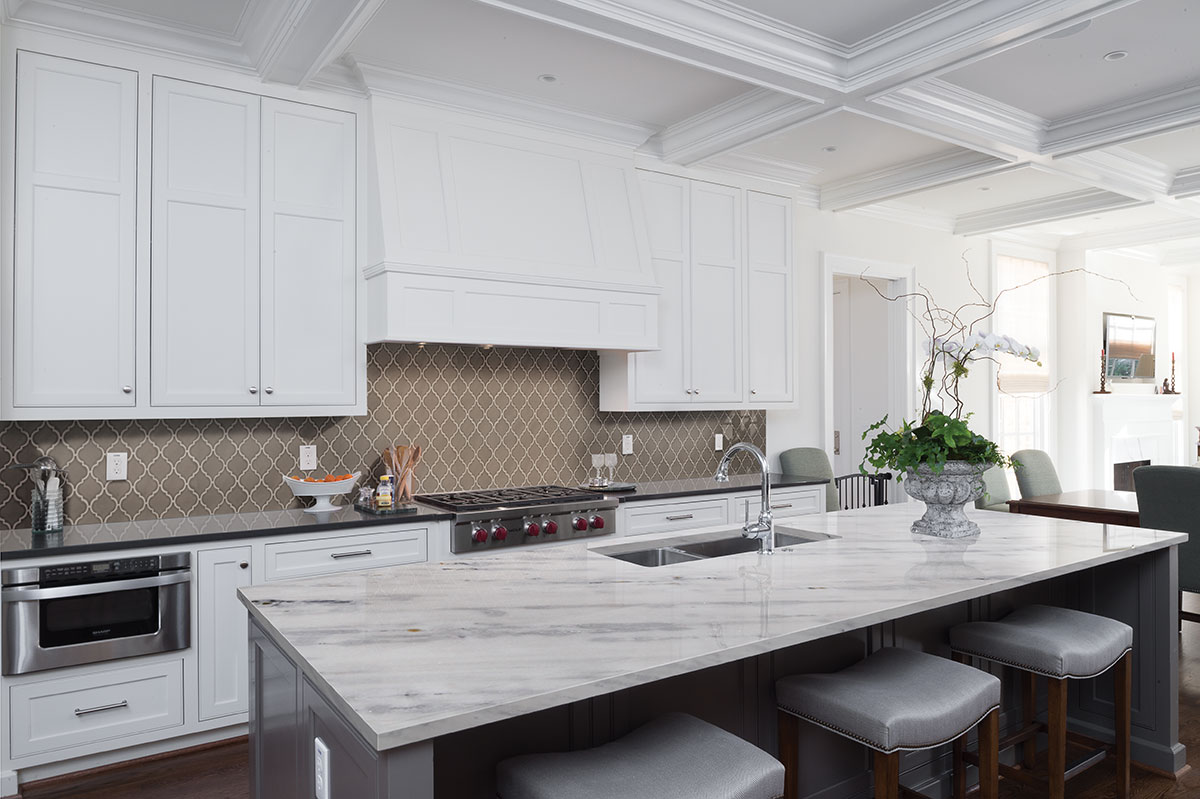
Marble can make a kitchen feel settled before the first meal is cooked. The veining has its own rhythm, the slab has variations you will not find in a printed catalog square, and the surface can become part of the room’s history.
That last part matters. Marble kitchen countertops can change with use. Before choosing, it helps to understand what an acid mark is, what a sealer can do, and whether you want a surface that develops character or one you expect to look consistently new.
Is marble a good choice for a kitchen?
It can be, provided you like the material’s natural character and accept the care it needs. Think about what happens on your counters: cutting citrus, making coffee, pouring wine, baking, preparing family meals or serving guests.
If a new dull mark would bother you every time the light catches it, decide that before choosing the slab. If you enjoy the way a natural material records use, you may be comfortable with a surface that changes over time.
You may enjoy marble if…
You value the individual slab, use boards and coasters, clean spills promptly and are comfortable discussing occasional restoration if wear becomes bothersome.
Compare other surfaces if…
You want a consistently even finish with less concern about common kitchen acids. Review actual quartzite, granite and engineered quartz options with their own care requirements.
You can also discuss using marble in a more specific part of the room rather than assuming every horizontal surface must be the same material. The right layout depends on how you actually work in the kitchen.
Etching is different from a stain
Etching is a chemical change at the stone’s surface. Acids in foods and drinks such as lemon juice, vinegar or wine can react with marble and leave a dull mark. A stain involves material being absorbed into the stone. One spill can potentially do both.
| What you notice | What it may be | A sensible next step |
|---|---|---|
| A dull patch visible in angled light | Possible etching of the surface finish. | Ask a qualified stone restorer to assess it; adding sealer will not restore the finish. |
| A darker or colored area within the stone | Possible absorbed moisture or staining. | Let the surface dry and identify the cause before selecting a treatment. |
| A film or streak sitting on top | Possible cleaning residue or buildup. | Use the approved cleaning routine, rinse and dry; seek advice if it remains. |
| A line or groove you can see or feel | Possible mechanical scratching. | Have a stone professional assess repair or refinishing options. |
These are clues, not a diagnosis from appearance alone. Different problems can look similar. Avoid trying stronger chemicals or abrasive scrubbing simply because a mark has not disappeared.
Will sealing prevent etching?
No. A suitable penetrating sealer can slow absorption and help reduce staining, giving you more time to clean a spill. It does not stop the acid reaction that causes etching. Ask which treatment is appropriate for your actual slab and how to maintain it; there is no single resealing interval for every marble.
Honed or polished marble?
Polished marble has a reflective shine. Honed marble has a smooth, lower-sheen appearance. On a polished surface, an etched area can interrupt the reflection; on a honed surface, the visual contrast may be less obvious.
That does not make honed marble acid-proof. It changes how some marks read. The underlying material still needs appropriate care.
Choose with the room’s lighting
View a finished sample near a window and under the intended task lights. Look across the surface from normal working and seated positions.
Choose with realistic expectations
Ask a fabricator or restoration specialist to show examples of normal wear in the proposed finish. A newly polished showroom piece cannot show you how you will feel about years of use.
Confirm the finish that is actually available for the selected slab. A honed sample from another marble is helpful for understanding sheen, but it cannot predict the exact tone or pattern of your stone.
Look beyond the stone name
Commercial names help you find a direction, but natural stone varies. Compare the actual slabs for background color, veining and any features the fabricator needs to consider. A room photograph should help you imagine a setting; it should not stand in for slab approval.
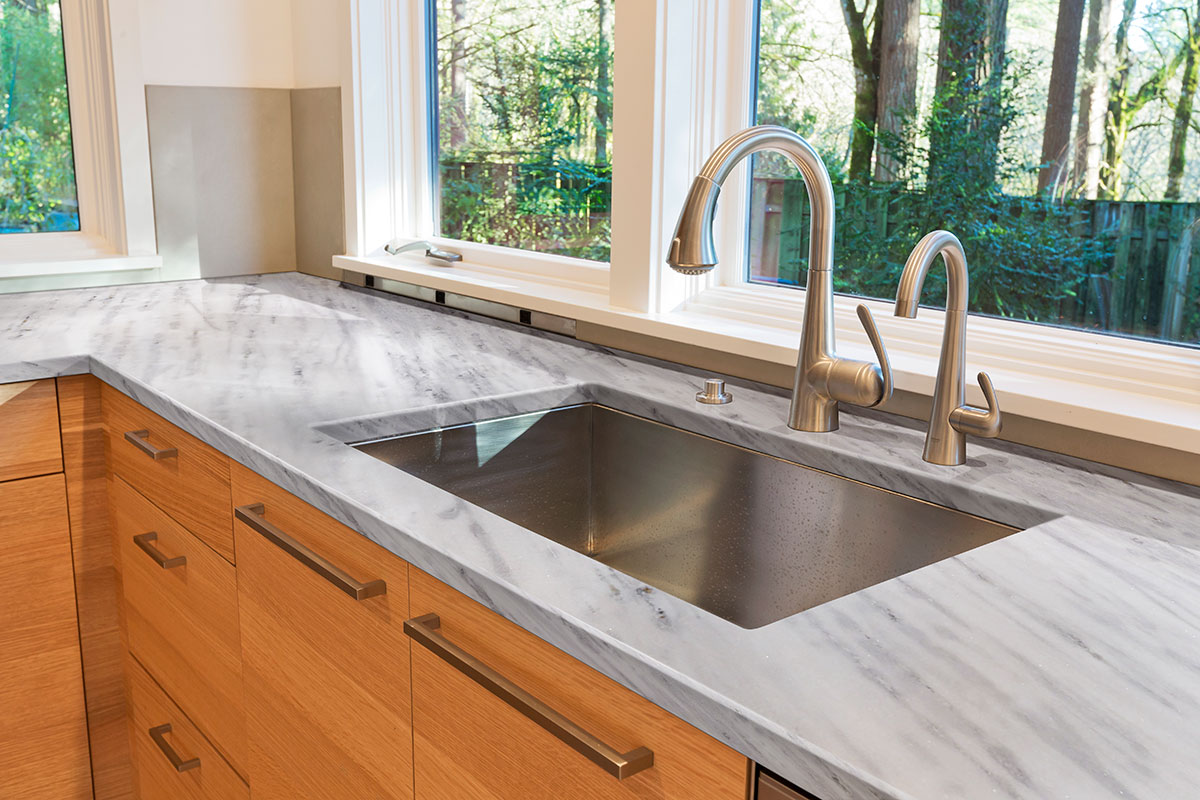
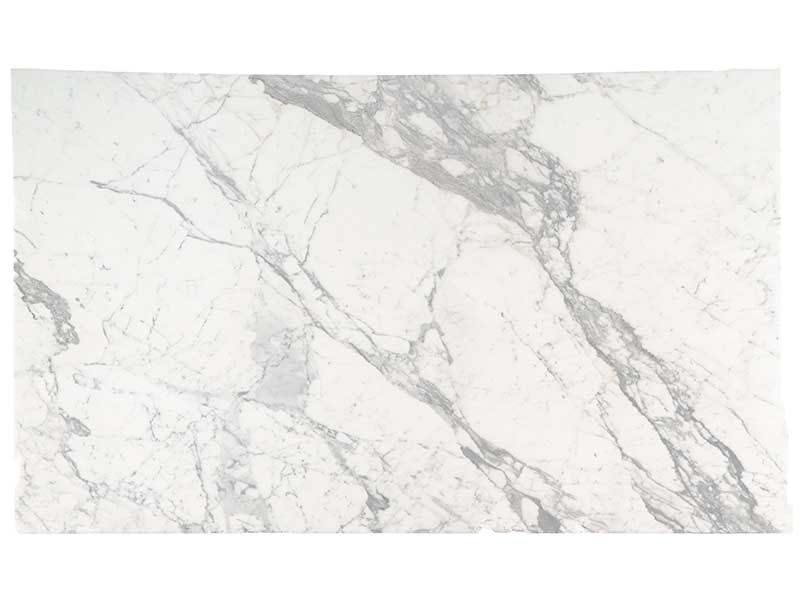
If you prefer finer movement, also compare Carrara White in the marble collection. Bring your cabinet door, backsplash and floor samples so the decision includes all the nearby colors.
Review the cut plan
Mark the island, perimeter and any vertical panels on the slab layout. Check where the main veins fall around sink openings and where adjacent pieces will meet. Discuss seams, support, access and the finished edge before fabrication.
Our countertop seam guide can help you prepare. A striking vein is an opportunity to plan carefully, not a guarantee that every cut will align automatically.
Daily habits that help
- Keep a prep board where you work. Make it easy to cut citrus and prepare food without doing so directly on the marble.
- Use coasters and trays. Give drinks and frequently used bottles a defined place.
- Blot spills promptly. Follow with the recommended cleaning routine rather than spreading the spill across the counter.
- Use a suitable stone cleaner. The Natural Stone Institute recommends neutral products, stone soap or mild dishwashing detergent, followed by rinsing and drying. Avoid acidic and abrasive cleaners.
- Use trivets. Protect the surface from hot cookware rather than treating natural stone as immune to every kind of heat exposure.
Keep the care instructions and treatment details with your project records. If a mark persists, ask a qualified stone professional to identify it before attempting a repair.
Can worn marble be restored?
Professional refinishing can address some etching and surface wear. The appropriate approach depends on the stone, finish, depth of the damage and any existing treatments. Ask for an assessment rather than assuming every mark is permanent—or that every problem can be removed completely.
What belongs in a marble countertop estimate?
Identify the selected slab, finish, thickness, edge, sink openings and backsplash scope. Discuss removal, access, supports and installation requirements. Confirm current availability and applicable care or treatment recommendations before ordering.
When comparing options, use the same room measurements and work scope. A slab price by itself does not describe the complete installed project.
Let’s look at the right marble for your room.
Send your favorite portfolio links, cabinet photos and rough measurements. Granite System can help review the slab, layout and care considerations for your project in Northern Virginia, Maryland or DC.
Please call before visiting our Chantilly showroom.
Sources & image notes. Reviewed November 14, 2026. Technical references: Natural Stone Institute care guidance, marble care, stone selection and acid sensitivity and finish overview. Featured stone reference: MSI marble product information. Kitchen imagery is manufacturer inspiration, not documentation of a Granite System installation. Natural colors and patterns vary by slab.