
Granite Countertops in the DMV: Slab Selection Guide
Start with the actual slab, then plan how it works with your room, seams, edges, and care routine. This guide helps you prepare a kitchen or bathroom project in Washington DC, Maryland, or Northern Virginia.

In this guide
In this guide
Granite’s appeal is its individual slab character
Granite is natural stone, so color, mineral detail, and movement vary from slab to slab. That variation can suit kitchens, islands, bathroom vanities, and bars in classic, transitional, or modern homes.
It is a durable surface, but appearance and care should be considered together. A higher material price does not automatically mean better durability, and a countertop upgrade does not guarantee a resale return.
A five-step slab selection checklist
A successful selection connects the stone with the layout and the written scope. Work through these details before approving fabrication.
-
Review the actual slab
Use online photographs to build a shortlist, then compare the actual slab or current slab photographs before ordering. Look across the full surface and consider which areas may appear on an island, around a sink, or along a narrow run.
Bring cabinet, flooring, and backsplash samples. Review the stone in the lighting that matters for your room, especially when several finishes have their own texture or pattern.
-
Understand levels before comparing prices
Granite System uses levels to organize selections by price range and related material characteristics. A higher level is not a strength or durability rating. Less common colors, distinctive patterns, and availability can influence pricing.
Browse the granite levels and color collection, then compare estimates for a specific color. Granite package options have eligible colors and a defined scope.
-
Plan seams, edges, and openings together
Corners, long runs, islands, sink locations, and cooktop openings affect the layout. Discuss proposed seam locations and the direction of the slab’s movement. Natural patterns cannot be assumed to match perfectly at every join.
Choose the edge profile, provide sink and cooktop specifications, and flag waterfall panels or a full-height backsplash. If you are considering two layouts, request separate estimates to see the effect of each design choice.
-
Ask for care guidance for your stone
Do not assume every granite countertop needs the same sealing schedule. Ask about the selected stone, its treatment, suitable cleaning products, and whether sealing is recommended. Keep those instructions with your project records.
For general care, use suitable mild or neutral cleaning products, a cutting board, and heat protection under hot cookware. MSI’s natural-stone care guide explains cleaning and stone-specific sealing considerations. No countertop should be treated as damage-proof.
-
Confirm the installation scope and access
Provide approximate dimensions, a sketch, and photos, plus the property location. Explain stairs, narrow entrances, and condo delivery rules. Final measurements are needed before fabrication.
Confirm the material, measured area, fabrication, installation, and project-specific extras. Ask whether removal, disposal, backsplash work, and plumbing arrangements are included or separate. Review the installation quote checklist so competing estimates cover the same work.
Compare three directions for your room
Light tones, mineral flecks, and bold movement create different effects. These examples help you form a shortlist; review the available slab before confirming your selection.
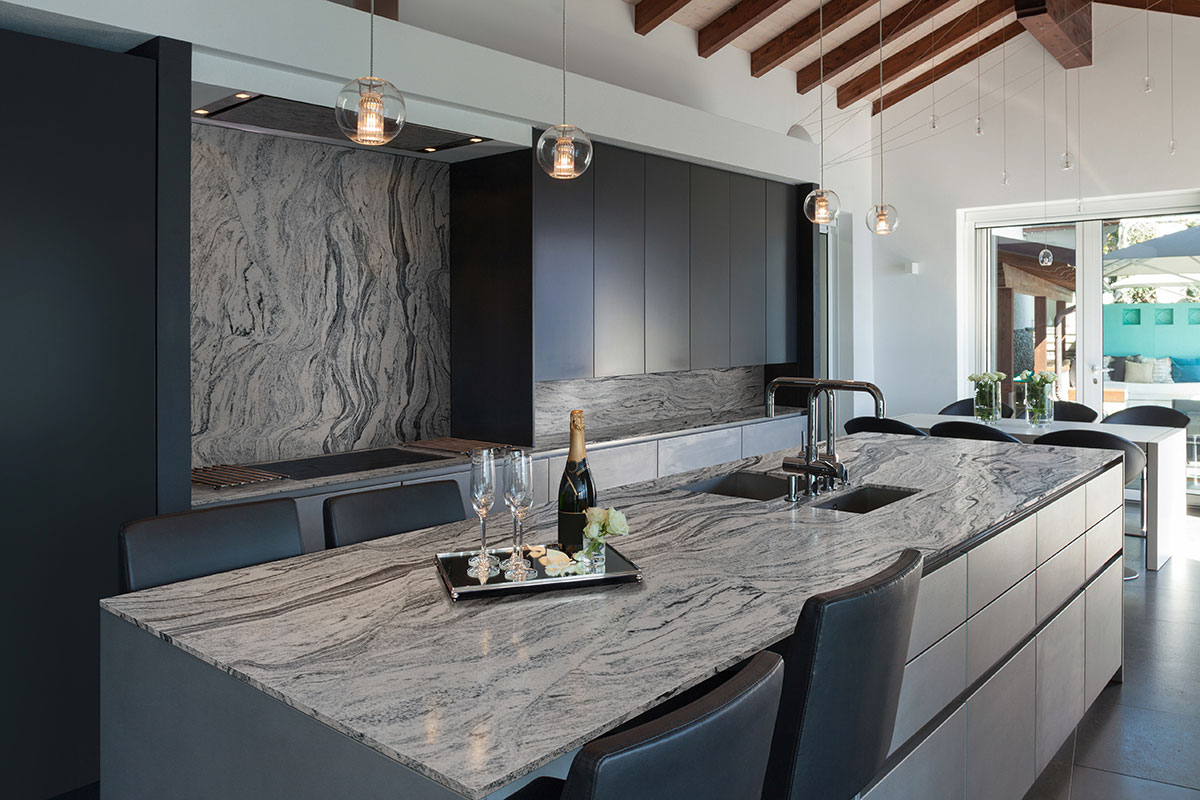
Flowing light tones
Silver Cloud’s white and gray movement can be compared beside plain cabinets and quieter finishes.

Dark mineral detail
Blue Pearl brings darker contrast and visible mineral flecks to a light kitchen palette.
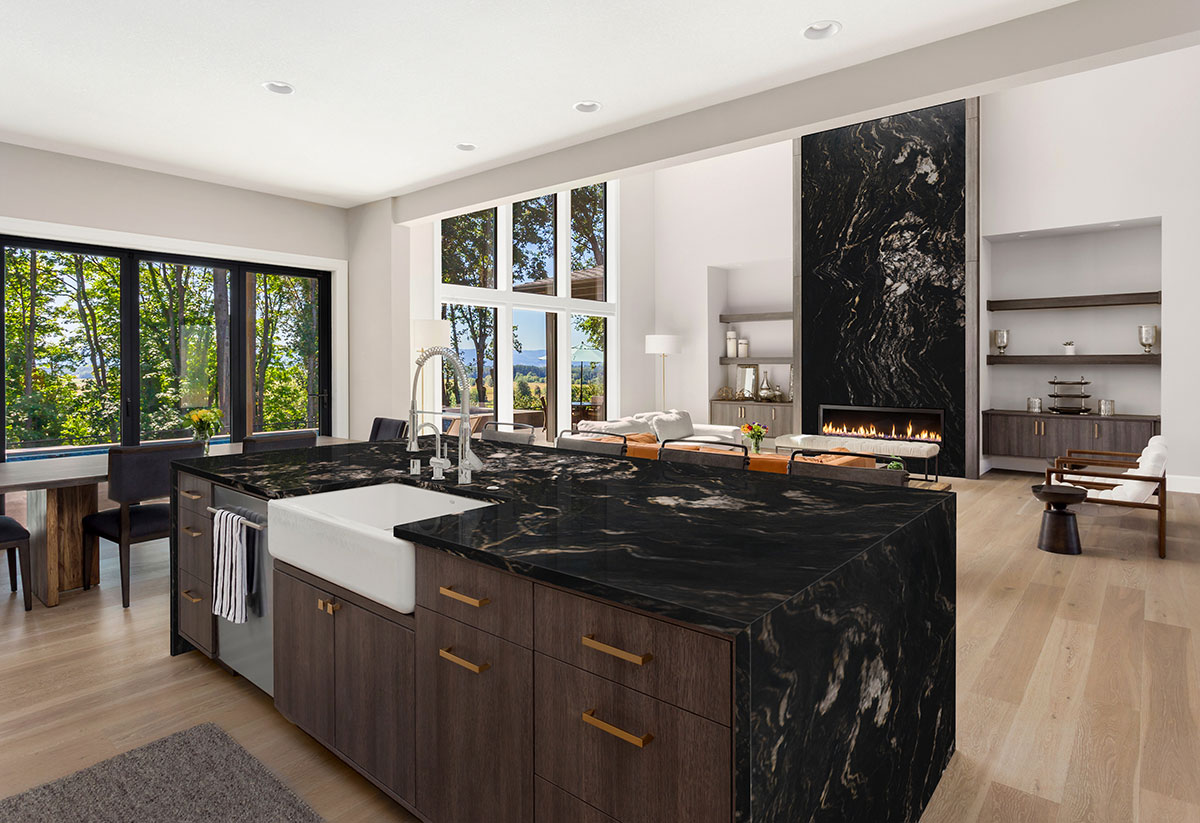
Bold natural movement
Titanium’s stronger movement can be balanced with simple cabinets and backsplash choices.
Keep quartz in the comparison if your priorities differ
Granite may suit you if natural slab variation is central to your design. Quartz may appeal if you prefer controlled patterns and no routine sealing. Compare real samples, the care guidance for each product, and the same project layout.
Explore the quartz collection, then read Granite vs. Quartz: Appearance & Care. For price context, use the separate granite and quartz cost guide.
Granite questions, answered
Are granite countertops suitable for DMV kitchens?
Granite can be a practical kitchen choice when its slab appearance, care requirements, and project scope fit your needs. Compare the actual stone before confirming a selection.
Is granite better than quartz?
Granite may suit homeowners who prioritize natural stone character and individual slab patterns. Quartz may suit those who prefer controlled patterns and no routine sealing. Compare the selected products and their care requirements for your home.
Do granite countertops need sealing?
Many granite countertops benefit from sealing, but the need and timing depend on the specific stone and its treatment. Ask your stone supplier for a recommendation for your actual selection rather than assuming a universal schedule.
Where can I see granite countertop options near Northern Virginia?
You can visit Granite System in Chantilly, VA to compare granite, quartz, and quartzite options and discuss your countertop project with the team.