
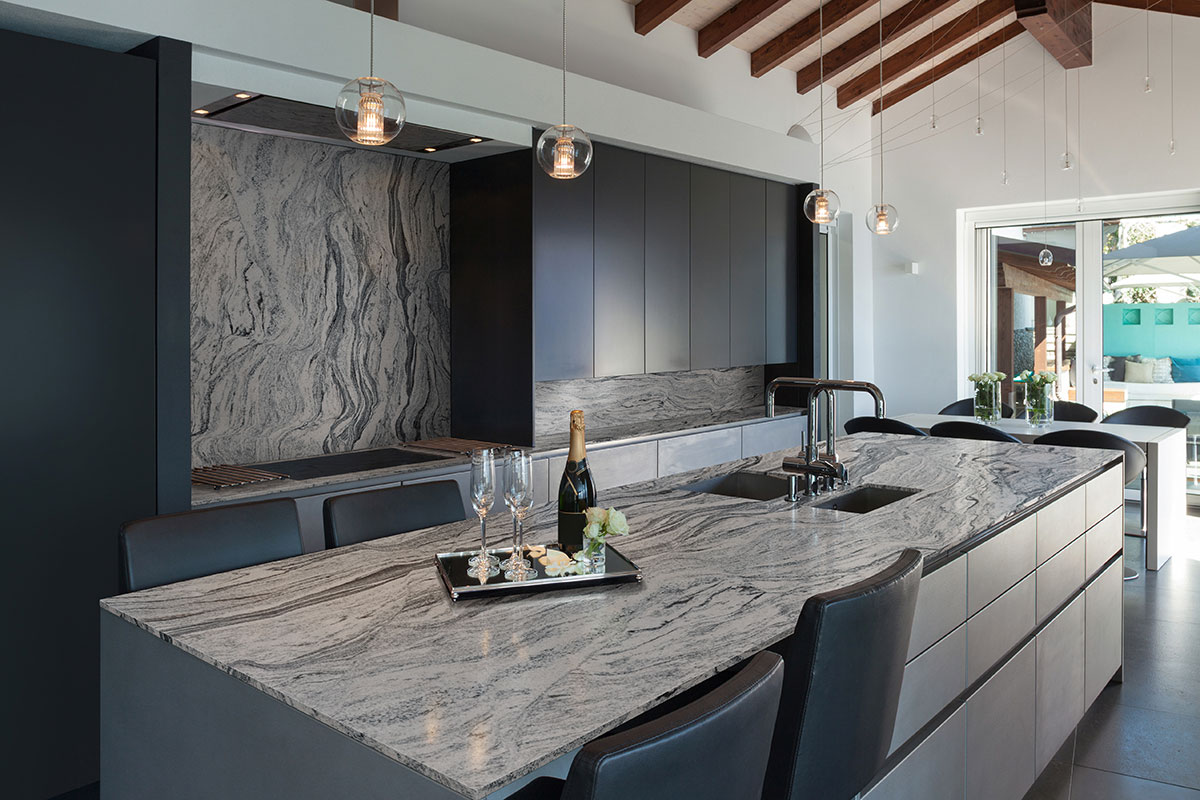
As homeowners in the DC, Maryland, and Northern Virginia regions plan kitchen and bathroom renovations, one of the biggest decisions is choosing the right countertop material. Granite and quartz are two of the most popular options because both offer durability, beauty, and strong long-term value.
The real question is not only “Which one is cheaper?” The better question is: Which material gives you the best value for your lifestyle, design goals, and maintenance expectations?
Understanding the Costs: Granite vs. Quartz
Both granite and quartz can fit a wide range of budgets. Final pricing depends on material selection, slab availability, brand, edge profile, layout complexity, sink and cooktop cutouts, backsplash details, and installation needs.
Granite Countertops
Granite is a natural stone, so every slab has its own unique color, movement, and pattern. Pricing can increase with rare colors, dramatic movement, premium slabs, and complex fabrication.
Quartz Countertops
Quartz offers consistent design, many modern colors, and low-maintenance performance. Premium brands and dramatic marble-look patterns can raise the final installed cost.
For DMV homeowners, long-term value comes from the right combination of material, layout, fabrication quality, maintenance needs, and installation experience.

Granite is ideal for homeowners who want unique slab movement and a one-of-a-kind natural stone look.
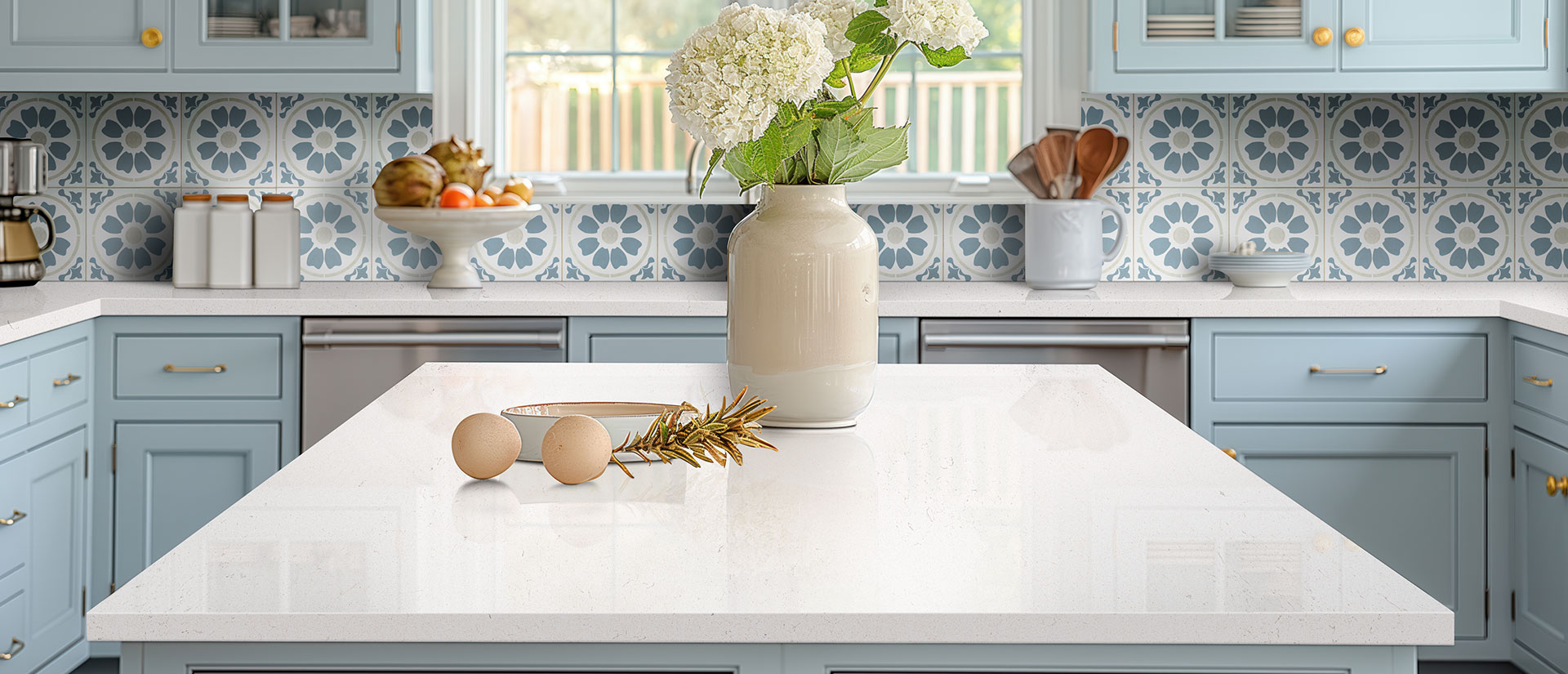
Quartz is popular for modern kitchens because it offers predictable design, bright colors, and easy everyday care.
Factors That Influence Countertop Cost
Material price is only one part of the final estimate. A simple countertop replacement and a full kitchen remodel can have very different project costs even when the same stone is used.
Standard colors usually cost less than rare granite, premium quartz, or dramatic designer patterns.
Square footage, island size, backsplash height, and layout shape all influence the final cost.
Edge profile, seams, sink cutouts, cooktop cutouts, radius work, and waterfall panels can affect pricing.
Access, cabinet condition, leveling, removal, and jobsite conditions can change installation requirements.
Granite may need periodic sealing, while quartz is often preferred by busy households for easier care.
Northern Virginia and DC homeowners often choose low-maintenance quartz for modern kitchen updates.
Granite vs. Quartz Cost and Value Comparison
Use this table as a quick homeowner-friendly comparison before visiting the showroom or requesting a detailed estimate.
| Category | Granite | Quartz |
|---|---|---|
| Typical Installed Range | $40–$200 per square foot depending on slab rarity and fabrication | $50–$150 per square foot depending on brand, color, and pattern |
| Appearance | Natural, unique, one-of-a-kind slab movement | Consistent, controlled patterns with many marble-look options |
| Maintenance | Often needs periodic sealing depending on the stone | Easy everyday cleaning and no typical natural-stone sealing routine |
| Best For | Homeowners who love natural stone character | Busy households, modern kitchens, and low-maintenance projects |
| Design Flexibility | Unique colors and natural movement vary by slab | Wide range of predictable colors, veining, and modern styles |
| Long-Term Value | Strong value when properly selected, fabricated, and maintained | Strong value for updated kitchens and move-in-ready design appeal |
Which Countertop Is Better for Your DMV Home?
If your priority is natural beauty and unique slab character, granite may be the better choice. Every granite slab is different, and that natural variation can make a kitchen feel rich and timeless.
If your priority is low maintenance, consistent design, and modern color options, quartz may be the better fit. Many homeowners in Northern Virginia, Maryland, and Washington DC choose quartz because it gives them a clean look with easier everyday care.
- Choose granite if you want natural movement, unique slab patterns, and classic stone character.
- Choose quartz if you want consistent color, low-maintenance performance, and modern marble-look styles.
- Choose based on your kitchen, not only the price. Cabinets, flooring, lighting, and backsplash all matter.
- Visit the showroom to compare real samples before making the final decision.
Why Factory-Direct Countertops Can Help Manage Cost
At Granite System, our team helps homeowners with material selection, measurement, fabrication, and installation. This direct approach helps reduce confusion, improve quality control, and make the process smoother from start to finish.
For homeowners planning a Maryland kitchen remodel, a Northern Virginia countertop replacement, or a DC bathroom vanity upgrade, working with an experienced countertop team can make the final result more predictable and more efficient.
Frequently Asked Questions
Is granite cheaper than quartz?
Granite can be cheaper than quartz depending on the slab, color, availability, and fabrication details. However, rare granite selections can cost more than many quartz options.
How much do quartz countertops cost in the DMV area?
Quartz countertops often range from about $50 to $150 per square foot installed, depending on brand, color, pattern, project size, and installation details.
How much do granite countertops cost in the DMV area?
Granite countertops often range from about $40 to $200 per square foot installed. Pricing depends on slab rarity, color, movement, edge detail, and fabrication complexity.
Which countertop is easier to maintain?
Quartz is usually easier to maintain because it has a consistent engineered surface and does not follow the same sealing routine as many natural stones. Granite is durable but may need periodic sealing.
Should I choose granite or quartz for resale value?
Both granite and quartz can support resale value when selected and installed well. Quartz is often attractive to buyers looking for a modern, low-maintenance kitchen, while granite appeals to buyers who love natural stone.