
Can You Replace Countertops Without Replacing Cabinets?
Keep the cabinets.
Change the surface.
A new countertop can refresh your kitchen without changing the layout. First, confirm that your existing cabinets provide a stable, properly prepared base.
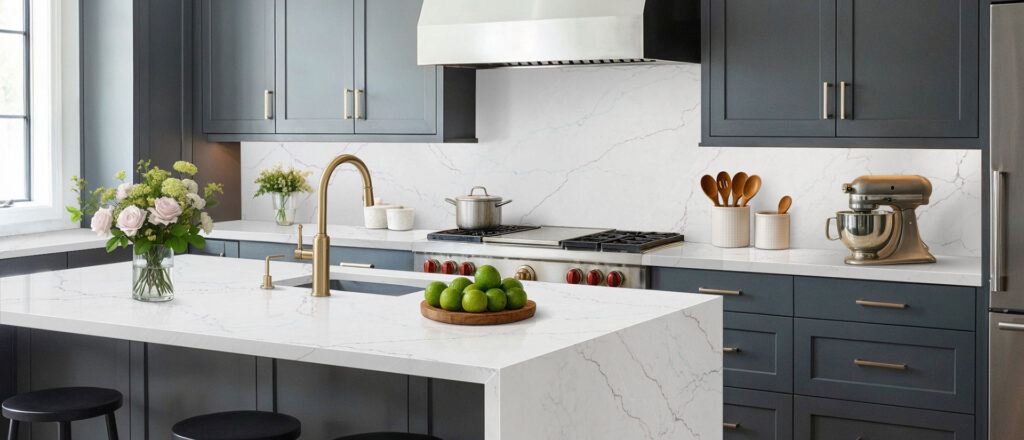
Age alone is not the deciding factor. Structural condition, level, water damage, sink and appliance details, and support requirements matter more.
Can You Replace Countertops and Keep the Existing Cabinets?
In many kitchens, yes. Existing cabinets can remain in place when they provide a stable base for the new countertop and the project does not require major layout changes.
A professional countertop replacement should begin with an evaluation of the cabinets and surrounding conditions. The new top will be fabricated to the finished cabinet layout, so problems such as loose boxes, sagging sections, water damage, or uneven runs should be addressed before final measurements.
Keeping the cabinets is usually most realistic when:
- The cabinet boxes are solid and securely fastened.
- The layout will stay substantially the same.
- There is no significant water damage, swelling, or structural deterioration.
- The cabinets are level enough to support accurate countertop fabrication and installation.
- The sink, cooktop, and appliance plan is compatible with the new countertop.
- Any required support for overhangs, islands, or heavier stone can be installed properly.
When Should Cabinets Be Repaired or Replaced First?
A countertop is only as reliable as the structure below it. Installing a premium stone surface over failing cabinets can create alignment problems, stress around seams and cutouts, and avoidable installation complications.
Cabinet repair or replacement may be the better choice when the boxes are visibly deteriorated, walls or cabinet runs are severely out of level, the sink base has moisture damage, or the new kitchen plan changes cabinet locations.
You should also reconsider a countertop-only project if you already know you want to change the kitchen footprint soon. New countertops are custom-fabricated for a specific layout. Moving cabinets later may mean the countertop no longer fits.
What Should Be Checked Before the Old Countertop Comes Off?
1. Cabinet strength and attachment
Cabinet boxes should feel stable, with no significant movement at corners, joints, or wall connections. The installer also needs to consider support around sinks, dishwashers, large openings, and countertop overhangs.
2. Level and alignment
Stone and engineered surfaces require a properly prepared base. Small conditions can often be addressed during preparation, but substantial sagging or misalignment should be corrected before the countertop is fabricated.
3. Water damage
The sink cabinet deserves special attention. Look for swelling, soft material, staining, separated joints, or other signs that moisture has weakened the box.
4. Sink and faucet plan
Decide early whether you are keeping the existing sink and faucet or changing them. Sink type, size, reveal, faucet holes, soap dispensers, and accessories can affect fabrication.
5. Cooktop and appliance dimensions
If a cooktop or other built-in appliance passes through the countertop, its final model and specifications should be confirmed before fabrication whenever possible.
6. Backsplash and wall transitions
Removing an existing countertop can affect the backsplash or wall finish touching it. A new countertop may also sit at a slightly different finished height. Plan for possible caulk, drywall, tile, or backsplash touch-up instead of assuming every existing finish will remain untouched.
Choose the surface. Confirm the support.
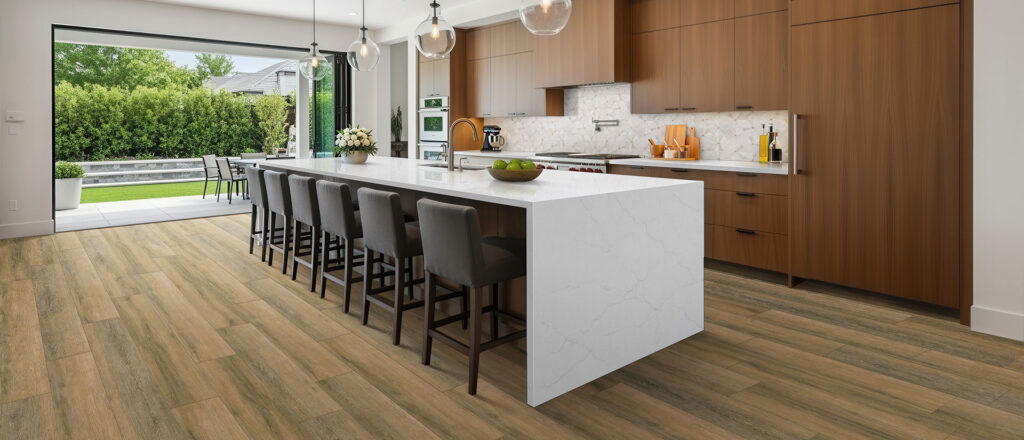
Can Granite Be Installed on Existing Cabinets?
Often, yes. Granite is commonly used in countertop replacement projects when the cabinets are structurally suitable and properly prepared.
The important questions are support, layout, cutouts, overhangs, and cabinet condition—not simply whether the cabinets are old. If you are comparing granite options, Granite System’s granite color and level guide can help you understand pattern and price-group differences. Homeowners looking for current package options can also review granite countertop specials.
Can Quartz Be Installed on Existing Cabinets?
Quartz can also be installed over suitable existing cabinets. Because quartz is fabricated specifically for the finished layout, the cabinets should be stable and all sink, cooktop, overhang, and seam details should be settled before final fabrication.
If you are comparing engineered-stone styles, browse Granite System’s quartz colors and quartz countertop specials before requesting a final estimate.
What About Quartzite or Marble?
Natural stones such as quartzite and marble can also be part of a countertop-only renovation, but the same principle applies: the existing cabinetry and support conditions must be appropriate for the selected slab, layout, openings, and overhangs.
Material selection should happen early enough for the fabricator to plan seams, cutouts, edge details, and support requirements around the actual project.
What Happens During a Countertop-Only Replacement?
A typical project follows a sequence similar to this:
- Evaluate the existing kitchen. Confirm cabinet condition, layout, sink, appliances, backsplash, and access.
- Select the countertop material. Choose granite, quartz, quartzite, marble, or another appropriate surface and confirm slab or color availability.
- Finalize project details. Confirm sink, faucet, cooktop, edge profile, backsplash plan, and any support requirements.
- Template or measure. Final fabrication measurements are taken from the finished cabinet layout.
- Fabricate the countertop. The selected material is cut and finished for the project.
- Remove the existing top. Removal should be coordinated carefully because adjoining walls, backsplash, plumbing, or cabinets may need attention.
- Prepare the base and install. Necessary preparation is completed before the new countertop sections are set, joined, and finished.
- Complete related connections and touch-ups. Plumbing, backsplash work, caulk, or wall repairs may follow depending on the scope.
Will Removing the Old Countertop Damage the Cabinets?
Careful removal reduces the risk, but no responsible contractor should promise that every existing surface will remain untouched. Old countertops may be screwed, glued, mortared, laminated, tiled, or integrated with a backsplash in ways that affect removal.
The condition and construction of the cabinets matter too. A solid cabinet can usually tolerate a controlled removal better than a weakened box with loose joints or moisture damage.
Before work begins, ask what is included in removal and disposal, what happens if hidden damage is found, and who handles plumbing or wall repairs if they are needed.
Do You Need to Replace the Backsplash at the Same Time?
Not always. Some backsplashes can remain, while others are more practical to replace.
The decision depends on how the old countertop meets the backsplash, whether the backsplash is attached to the countertop, the finished height of the new surface, and whether removal exposes gaps or damaged wall areas.
If you want a full-height stone backsplash, matching slab backsplash, or a different tile design, countertop replacement is often a convenient time to coordinate it.
Should You Replace the Sink During Countertop Replacement?
You may be able to reuse an existing sink, but countertop replacement is a good time to decide whether the current sink still meets your needs.
Changing from a drop-in sink to an undermount sink, changing sink size, or selecting a workstation sink can alter the countertop cutout. Make that decision before fabrication—not after the slab is cut.
How Much Does Countertop Replacement Cost in the DMV?
There is no single reliable project price without knowing the square footage, material, slab or color group, edge, cutouts, backsplash, removal requirements, access, support conditions, and related work.
For a useful starting point, try Granite System’s countertop price calculator. You can also compare current countertop deals for common kitchen sizes. Final pricing should be confirmed after the project conditions and measurements are reviewed.
Countertop Replacement vs. Full Kitchen Remodel: Which Is Better?
A countertop-only project is usually worth considering when you like the current layout, the cabinets are in good condition, and the countertop is the main element making the kitchen feel dated.
A broader remodel may make more sense when you want to move appliances, change cabinet storage, open walls, modify the kitchen footprint, replace damaged cabinets, or coordinate several finishes at once.
If your project goes beyond the countertop, Granite System’s kitchen remodeling page outlines options for combining cabinets, countertops, backsplash, sink, faucet, measurement, and installation support.
A Simple Pre-Replacement Checklist for Homeowners
- Do I like my current cabinet layout?
- Are the cabinet boxes solid and securely installed?
- Is there any water damage under or around the sink?
- Am I keeping or changing the sink?
- Have I selected the final cooktop or built-in appliance?
- Do I want to keep or replace the backsplash?
- Will the project include an island or extended overhang?
- Have removal, disposal, plumbing, and wall touch-ups been included in the scope?
- Have final measurements been taken after the cabinet layout is settled?
Frequently Asked Questions
Can you replace laminate countertops with granite without replacing cabinets?
Yes, when the existing cabinets are structurally sound and suitable for the new granite layout. The cabinet condition, support, level, sink, cooktop, and overhang details should be evaluated before fabrication.
Can you replace laminate countertops with quartz and keep the cabinets?
Often, yes. The cabinets must provide a stable base, and all openings and support details should be finalized before the quartz is fabricated.
Can you change countertop color without changing cabinets?
Yes. Keeping the cabinets and choosing a new countertop color can significantly change the appearance of the kitchen. Bring cabinet-door samples, photos, or finish information when comparing stone and quartz colors.
Do cabinets have to be perfectly level for new countertops?
The finished cabinet run needs to be properly prepared for accurate fabrication and installation. Minor conditions may be correctable, but substantial sagging or misalignment should be addressed before templating.
Should countertops or backsplash be installed first?
For many renovation projects, the countertop is installed before a new backsplash so the backsplash can finish cleanly to the final countertop height. Existing backsplash conditions can be different, so the sequence should be confirmed for the specific kitchen.
2 Comments.
[…] you plan to keep your existing cabinets, review our countertop replacement guide before making final selections. Confirm cabinet suitability and the finished layout before […]
[…] suitability. Keeping sound cabinets may make a countertop-only update worth considering; our countertop replacement guide explains the […]